film

The Dark Knight

For the past week, I would say I haven’t gone a single day without hearing about The Dark Knight.

Usually, I try to keep my ears and eyes closed to any criticism of a film before I’ve seen it, but there was no avoiding the constant mummers of Heath Ledger’s Oscar-worthy performance.

Tonight, I finally saw what all the fuss was about. I had feared dissapointment, but instead found complete awe. If I didn’t know it was Ledger, I would never have recognized him. He is completely and utterly The Joker– dark, twisted, and a little bit funny. I literally yearned to see more of him in the film.

It is easy to note how tragic it is that this was his last fully completed film. I’ve always believed there are very few actor actors– those who are in it for the art, rather than the fame and fortune. It is very clear that Ledger is one of the few, and for all his fans out there, The Dark Knight is a true testament of that.

After we’re gone, most of us will only leave behind our offspring, and the memories we’ve shared with others. But for the lucky few, they leave behind eternal documentation of their greatness–whether that be in writing, or, in Ledger’s case, film. And we’re all pretty lucky to get to see that greatness.

film

Broken- Downtown Film Festival

Broken

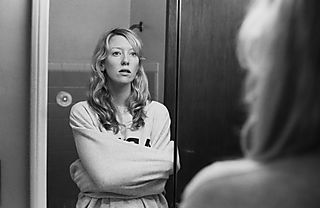
“Broken,” a short film I have some association with, has been accepted to Los Angeles’s Downtown Film Festival. It will show on Aug. 16.

“Broken” Director: Harry Buerkle 2007, USA, 7 mins. Numbing loneliness has led a woman to make a decision that she comes to regret deeply the next day.

The festival seems to have some interesting films, so it is probably worth stopping by, even if you can’t see “Broken.” Schedule here.

film

Criticism of the Critic

The LA Times had an interesting piece on film criticism in their paper today. They let their film critics write about any regrets they’ve ever had about a film they reviewed.

I love film criticism. In a perfect world, I could see movies and write about them everyday (if it would pay the bills). But it is, in my opinion, one of the toughest jobs in writing because you put a part of yourself out there.

I took a reviewing class with Kenneth Turan while I was at USC. It was probably my favorite class of all. Since he is the best film critic at the Times, I expected Kenneth to be a man of intolerable ego, and harsh–well–criticism. What I found was a man confident in his craft, and kind with his teaching. I learned then that the people who are best at what they do don’t need to walk around with a puffed up chest or a thick set of armour.

His article today really makes clear the point and process of criticism. There should be no regret if you are true to your own feelings. Here’s a bit of his article. Find the whole piece here.

“To pretend either to like it or that I didn’t really have an opinion, to pretend in effect that I was someone else to save face and be one of the gang, was simply unacceptable. Criticism is a lonely job, and in the final analysis, either you’re a gang of one or you’re nothing at all.”

film

Reversion- A Film Review

Reversion


The unknown future and the forgotten past are inherent parts of the human life. What would happen, however, if the past, present and future could be lived at the same time?


Mia Trachinger’s latest project attempts to mess with the concepts of memory, morality and destiny to create a real thinker of a film. But jam-packed with such complicated concepts, “Reversion,” falls short in execution as the story is stifled under the pressure of such heavy theory.


“Reversion,” which premiered this year at Sundance, tells the tale of lean, listless Eva (Leslie Silva), one of the many mutants with the ability to see the past, present and future simultaneously. Basically, she’s part psychic, but also can’t differentiate between what has already happened and what is yet to come. She spends her time car-jacking and searching for a way to stop herself from fulfilling her destiny to kill her semi-boyfriend, Marcus (Jason Olive). Marcus is along for the ride, and is at first apathetic about his imminent death, but becomes increasingly agitated as time progresses.


Los Angeles is not a pretty city in the near-future. Car-jacking, robberies and even murder are so common that the citizens don’t even blink as it happens right before their eyes. Even more disturbing is the fact that Eva and her housemates are completely comfortable participating in criminal activity. Their mutual understanding seems to be that because they already know their future, there’s no use trying to fight it.


Silva is magnetic enough to carry the plotline. She instills into Eva a satisfying mix of tormented, hopeful and indifferent. She is also a step above most of the other actors in the film, who are only memorable for the strange, vacant looks on their faces.


The main story, however, is interrupted by two distracting sub-plots. The first involves two babbling stoners who provide an explanation of the mutants’ problem (they are lacking a “time gene”), and the other, ominous commentary on child-rearing, is an awkward attempt to make this twisted tale even more surreal.


Regardless of the distractions, the main plotline has problems of its own. The mutation is never really explained, so there’s no way to really tell what it means to the characters. They are endlessly removed from their own lives, making it pretty hard for anyone to be sympathetic to their plight. There’s a mysterious beach, which has a colony of people who are somehow different from Eva, but who they are is never clarified. Are they also mutants? Or do they view time in a linear fashion?


Making it worse, the relationship between Eva and Marcus feels more like a tryst than a serious love connection. They don’t seem to really care much for each other, so Eva’s determination to resist killing Marcus is also a little hard to care about or even believe.


So without love between Eva and Marcus, fate steps in. If they can already see their future, and see it as inevitable, then Eva’s journey is null and void. And because of that fact alone, the fate of this film can also be determined—forgettable as the past.

film

Lars and the Real Girl- Review

It’s been a while since I’ve reviewed a film, and I am going through withdrawals, so I thought I’d whip out my thoughts on my latest viewing, Lars and the Real Girl.

Lars

I remember hearing about this movie when it was out in theaters back in October, and again when it was nominated for an Oscar for Best Screenplay, but I somehow missed it. So, Netflix provided me with yet another reason to love those little red envelopes of love (sidenote: did you know red envelopes are also a traditional way to give money in Chinese culture?)– a second chance.

When explaining the plot of the movie as “a guy who has a life-size  doll as his girlfriend,” it’s pretty easy to assume it is a cheesy, low-blow joke movie of the “Dumb and Dumber” genre. But that is far from the case. “Lars and the Real Girl” is so great because while it runs the risk of being over the top, the writer succeeds in making a beautiful, sweet film instead. That’s talent.

Ryan Gosling plays Lars, who lives in the garage of the house he shares with his brother and pregnant sister-in-law. He’s a little odd- anti-social and maybe obsessive compulsive. He hates to be touched, and isn’t the most social guy. But then he gets a girlfriend, sort of.

Gosling is one of the few actors who could have really made this role sing. He’s endearing in a deer-in-headlights sort of way. It’s perfect for Lars.

The magic of this movie is the way an entire universe is created. Where a town loves Lars so much that they go along with his delusion. And learn something along the way. It’s a really smart film.

At times, the interactions with the doll reminded me of when I was a kid and barbies had their own world. I really believed they were real, for a while. And maybe that’s why this film is so great. We are right back where we were when we were six- anything’s possible.


film

The Tragedy of Sex and the City

I just got back from seeing Sex and the City. I had waited a few days after the release because God knows there is no way I would want to be stuck in the throngs of dressed up women stampeding to the theater on opening night.

I wish I could understand how I felt about the film.

The first half an hour was amazing. Everything familiar and fabulous about the television show which women have missed so much was back–the fabulous optimism, the friendships and the clothes. The amazing, breathtaking clothes.

But then, tragedy stikes. Over and over again. In the most painful of ways. The drama is beautifully displayed. It’s the kind of heart-wrenching sadness that sticks with you even after the film is over.

I figured there were only a couple ways this film could end, in regards to Carrie’s fate. I won’t spoil it for anyone who hasn’t seen it, but when you think about it there are only two ways you can end up: alone, or with someone.

There were so many things that frustrated me about this film. The ending being number one. Also, the way some of the really interesting friends got shafted in their story lines. Charlotte and her husband are nearly absent. Samatha is one-toned in her Malibu lifestyle.

Yet, while a part of me is consumed by frustration, another part feels only jealousy. I am jealous that I haven’t written three fabulous books, that I don’t live in amazing apartment in New York, and that my best friends aren’t close enough to meet up with me for lunch every day. I am jealous that I don’t own those shoes. Or that dress. But we all know this isn’t reality. Who could live in New York like that on a writer’s salary? And that’s what is so great about this story–women love it because it is everything they can never have. And that’s why a part of me will always be pissed off about it.

But regardless of its imperfections, there is no denying that having Sex and The City made for the big screen is long overdue. Everything about it was truly grand. Bigger than ever. And, mostly, better than ever.


film

Film Review- Bigger, Stronger, Faster*

Nearly a year ago, Canadian pro wrestler Chris Benoit killed his wife and seven-year-old son before taking his own life. When it was implied that steroids may have caused Benoit’s outburst, most people probably accepted that reasoning without any questioning. Of course.

But a new documentary, “Bigger, Stronger, Faster*,” raises all sorts of questions about performance enhancing drugs. Actually, the film succeeds in creating questions that the average non-juicer, non-pro-athlete probably never even thought about. The well-researched, thorough documentary which premiered at the 2008 Sundance Film Festival never answers most of its own questions, but it is a powerful catalyst into a discussion of what steroids mean to America.

Chris Bell, who is the narrator, director and co-writer of the documentary, presents his own family as a microcosm of the steroid addiction. Both his older and younger brother use steroids, with dreams of becoming famous bodybuilders and pro wrestlers.

Bell grew up with muscles and manliness at the center of his universe. He cites Arnold Schwarzenegger, Hulk Hogan, and Sylvester Stallone as his heroes of youth. He and his brothers would train and wrestle in the basement in hopes of someday becoming wrestlers as we see through the use of home-video footage.

But, years later, the brothers have fallen short of their championship belt dreams and their childhood realities have been crushed: their idols were doping up, wrestling may be fake, and the American dream to be the best may mean cheating.

Bell’s storytelling is in fine form, as he interviews politicians, ex-wrestlers, weightlifters, Olympic athletes, doctors and activists. Every angle of the steroid debate is discussed from the use of Olympic athletes to high school players.

From the producers of “Bowling for Columbine” and “Fahrenheit 911,” the editing is crisp, clean and succeeds in presenting the irony and contradictions of the characters without forcing it.

There are several surprising arguments that Bell is able to bring to the table. Many of his sources argue that steroids are far less dangerous than many legal substances, especially tobacco and alcohol. There were only 3 steroid-related deaths in the U.S. last year, compared to the over 400,000 due to tobacco, according to their research.

It’s hard to swallow this argument. From an early age, it has been instilled in us that steroids are bad. They are cheating. And the conflicting nature of many of the character’s in the documentary make even harder to really believe that maybe steroids should be legal. First the athletes say they never did steroids. Then they say they did them, but everyone does them. Then they say they only drank herbal tea.

The steroid debate is a mess, but only because the demands of the American dream make it so. To be the best, to be the winner is asking a lot of the people of this country. In the shadows of these superhuman mortals, the fantasy of greatness is more lethal than any shot or pill could ever be.


See this article here
.

In theaters Friday, May 30, 2008.